Powfrax <sup>®</sup> Dust Removal Ceramic Fiber Filter Element<br />
for Low, Medium, High Temperature for South Africa
Application: Industrial furnace exhaust gas dedusting, ultra-low dust purification, and acidic component removal.
Performance: Dust removal efficiency ≥ 99% (typical particulate emission concentration < 5 mg/Nm3, minimum can be < 1 mg/Nm3).
Temperature:
- HT200 Low-Temperature Series: <200°C (impregnated waterproof layer filter)
- HT600 Medium-Temperature Series: 200-600°C
- HT900 High-Temperature Series: 600-900°C
Features: High porosity (>80%), high strength, low resistance (<300pa per meter per minute), ultra-long service life. Fully replaces electrostatic precipitators and fabric bag filters.
Warranty: 5 years, with a service life of up to 8-10 years under specific conditions.
Typical Usage: Ceramic integration or adsorbent conditioning + ceramic fiber filter + medium-low temperature SCR catalyst system process
The Powfrax ceramic fiber filter from ZTW is a new ceramic dust removal technology that replaces traditional fabric bag filters, cyclone separators, and electrostatic precipitators. It addresses the issues of easy blockage and high maintenance costs of traditional baghouse filters. Thanks to its ultra-high porosity, gas-to-cloth ratio, and ultra-small nanoscale pores, it can achieve 99% removal of industrial dust and particulate matter including PM10, PM2.5, and PM1.0. A unique adsorbent filter cake forms on the surface of the ceramic filter tube, and through this filter cake, it can also remove over 95% of acidic components in flue gas. In flue gas treatment projects using ceramic filter tubes, the typical emission concentration of industrial dust and particulate matter is <5 mg/Nm³, and it can even reach <1 mg/Nm³. Its normal service life exceeds 5 years, and under specific conditions, it can even last for 8-10 years.
With the ceramic integrated technology, dust removal, denitrification, desulfurization, reduction of ammonia slip, removal of dioxins and other functions can be achieved simultaneously in the same system, greatly reducing the system's footprint and annual environmental protection costs.
Especially for high-temperature scenarios of 600-900°C, the efficiency of traditional dust removal processes drops rapidly, making the ceramic fiber dust removal filter tube the optimal solution for this temperature range.。It can be widely applied in fields such as waste incineration and metallurgy.。Learn more about the manufacturing process
Customized High-Alumina Ceramic Fiber Raw Material
Chemical Composition
- 1. Al 2O 3 > 45-48%、SiO 2 > 51-54%
- 2. Al 2O 3+SiO 2 > 99.6%
- 3. Na、K、Mg、Ga < 0.3%

Physical parameters
- 1. Ceramic fiber diameter: 2.5-3.5um
- 2. Fiber shear ratio Bik value: 200±40
- 3. Fiber slag ball (212um) content: < 8-15%
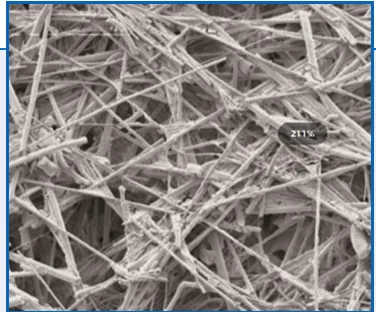
Ceramic fiber length distribution
| Number of fibers | 10004 pieces | Total quantity | |
| Fiber length: Arithmetic mean and length-weighted length | 0.507um | 0.777um | 143.842 million/g |
| Width | 8.5um | ||
| Thickness | 0.0125 mg/m | ||
| Twist angle and twist fiber content | 127° | 17.0% | |
| Curvature | 7.8% | ||
| Strand Brushing Length Ratio | 0.831% | ||
| Broken Fiber Ratio | 6.67% | ||
| Fines: Length Ratio and Length Weighted Ratio | 61.8% | 55.16% | 2804.383 million/g |
| Area ratio of fine fibers | 18.98% |

Ultrafiltration characteristics: Over 100 layers of filter paper Nanoporous technology
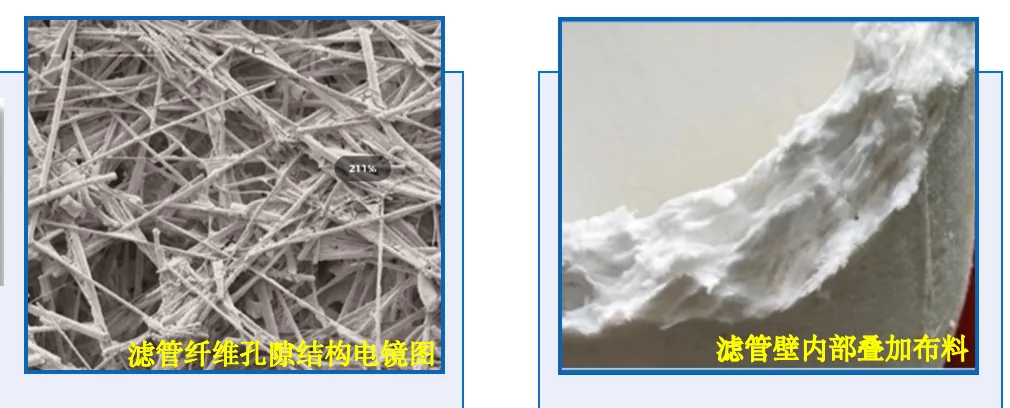
Ceramic fiber filter adopt an axial stacking weaving forming process, utilizing centrifugal force through an internal mold forming method to evenly stack the fiber slurry layer by layer, ensuring uniform distribution of the filter tube wall thickness. The final product filter tube stacks filter paper exceeding 100 layers, significantly increasing the contact area with gas.
Production Process
Raw material quality inspection and trial production
Test parameters such as chemical composition, fiber diameter, fiber length, slag ball content, and beak value for trial production to determine production parameters.
Fiber raw cotton shear drying
Using patented original cotton shearing technology, the original cotton is cut into finished cotton less than 1mm, and quality parameters are tested to ensure the cotton quality.
Molding production
The molding production is formed by using an internal mold to centrifugally stack fiber slurry. The finished product needs to stack more than 100 layers of filter paper to ensure that the filter paper expand area of each filter tube exceeds 3 square meters.
Drying stage
After continuous low-temperature drying for 15 to 20 hours, ensuring drying quality without damaging the internal structure.
Grinding and hardening stage
Trimming the product appearance and performing two hardening operations, after multiple inspections meeting factory standards, it enters the warehouse.
Quality inspection tracking each stage
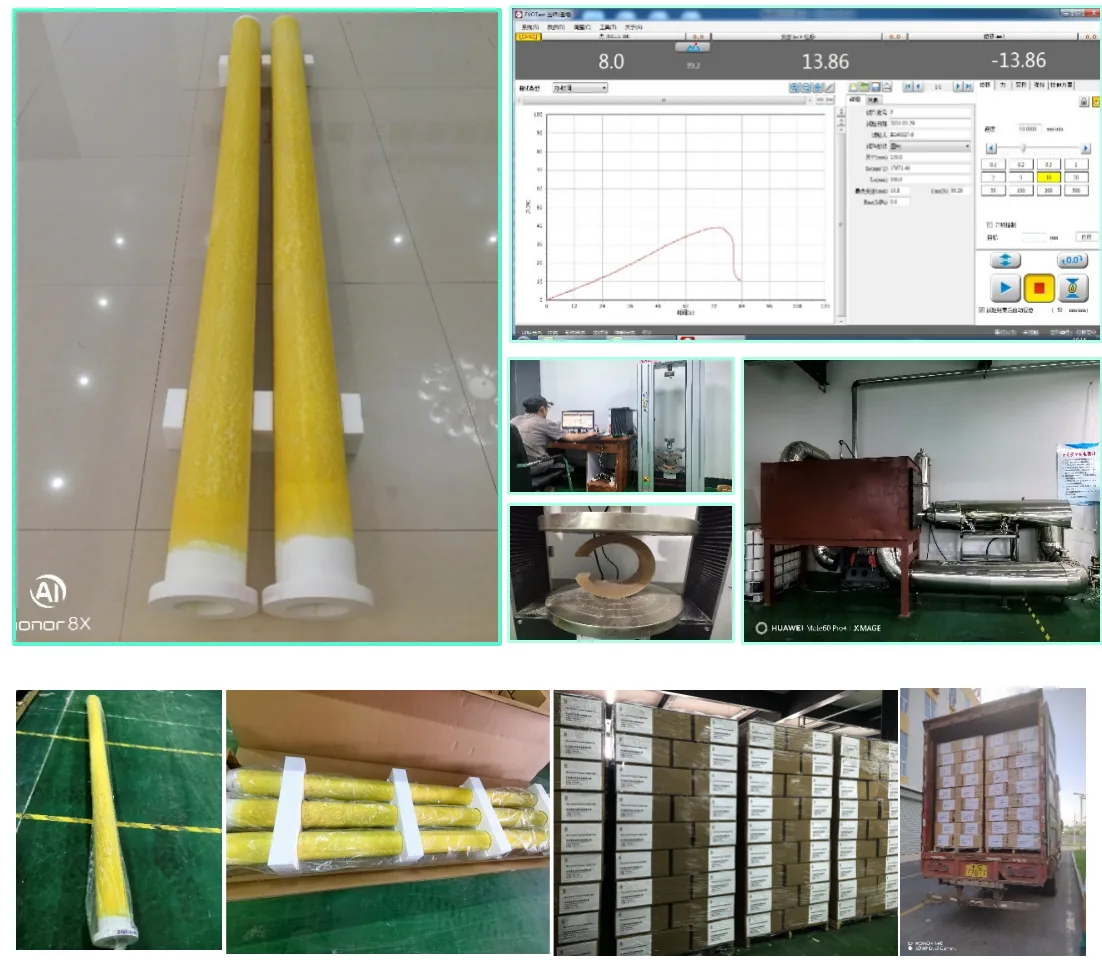
At each stage mentioned above, the quality inspection department checks the quality parameters of the finished products to ensure high-quality production. After production is completed, each batch of ceramic filter components will be tested for strength, pressure difference, porosity, density, appearance, dimensions, etc., and an inspection report will be issued. The strict quality inspection throughout the entire process not only guarantees product quality but also forms a unique, unalterable, and traceable quality report.
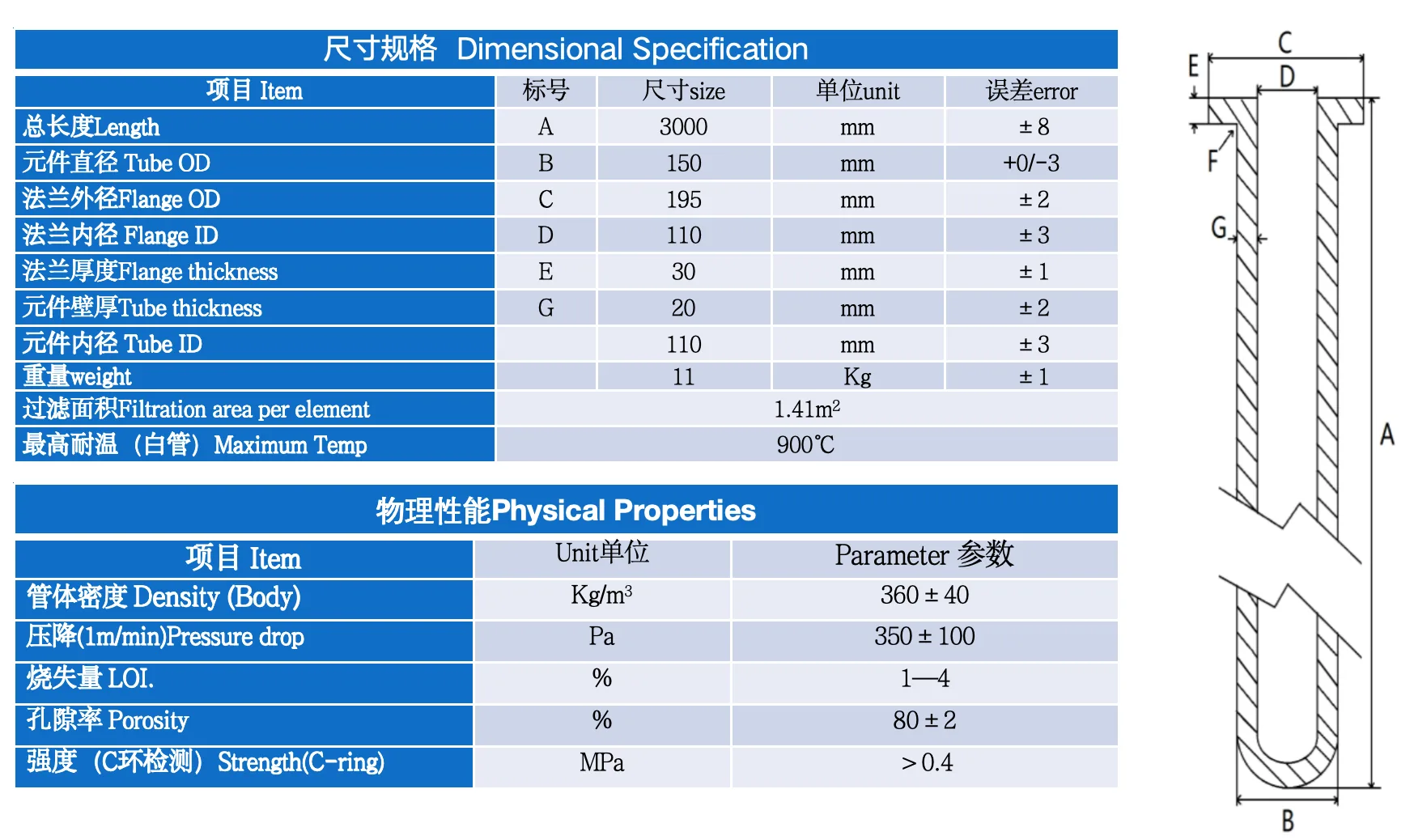
Ceramic Fiber Filter Parameter
Our customers
Since 2017, we have implemented over 50 glass furnace ceramic integrated flue gas purification projects for companies such as Wuliangye in Yibin, Shandong Pharmaceutical Glass, Sichuan University of Science and Technology, Anhui Shengshi, Shandong Luzhong, Shandong Jingyao Glass, and Luzhou Huasheng. Among these, the "Luzhou Liquor Industry" three-line air glass melting furnace environmental protection project is the first third-party operation project in China for daily glass furnace air pollution control adopting an "investment + operation" model. The "Sichuan University of Science and Technology" full-oxygen glass melting furnace is the first environmental protection project in China to use ceramic filter tubes + SCR denitrification technology for full-oxygen glass melting furnaces.
Ceramic Filter FAQ
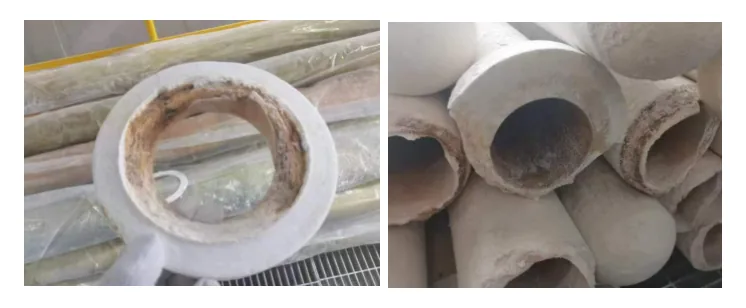
1. Flange crushing or breaking
The flange cracking or breaking is due to insufficient curing strength. Usually, conventional curing is used, with a flange thickness of 30mm. If the flange generally has a curing depth of less than 10mm, or even only 6-8mm, and 10-15mm in the middle sandwich is not cured, resulting in insufficient hardness of the flange and easy to damage during operation. ZTW Powfrax ceramic fiber filter tube is deeply cured, with the middle sandwich <10mm, usually 5-8mm, so the flange strength is high.
-
Flange crushing or breaking - Low flange strength
There are two main reasons for the holes in the ceramic fiber filter tube during operation: First, the poor layering of the centrifugal fabric of the ceramic fiber filter tube molding and the small discharge volume, resulting in the small volume density of the ceramic fiber filter tube body and the low backblowing wear resistance strength; Second, there are defects in the flange side of the ceramic fiber filter tube with a small volume density defect and the unreasonable design of the backblowing system, which makes its backblowing pressure too large, and it will also cause severe wear and damage to the inner wall at the front 500mm of the flange side due to long-term backblowing wear.
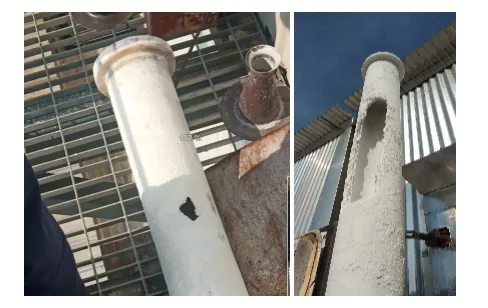
Holes in ceramic filter - Reverse blowing pressure or uneven wall thickness, poor inner wall strength
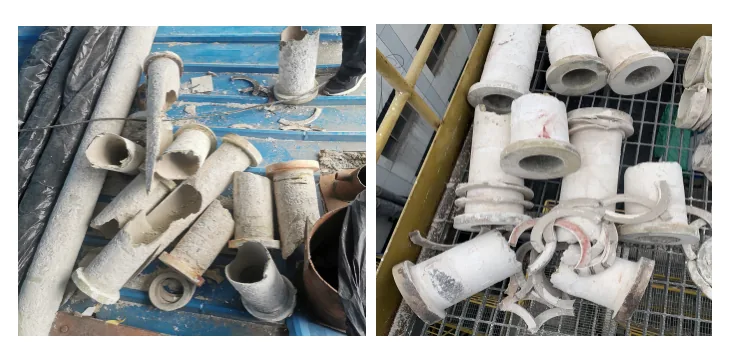
Breakage occurs 30-60cm from flange - Process defect causing low strength of ceramic filter tube 30-60cm in length
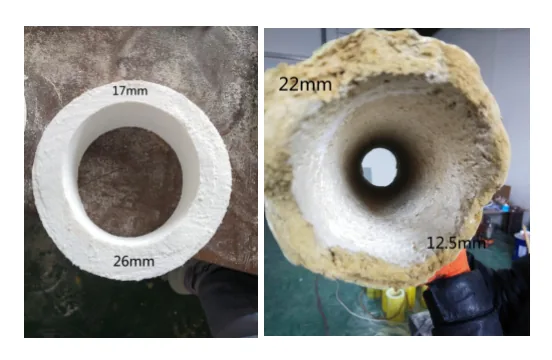
Large deviation in inner wall thickness - Process defect causing
\n2. Normal ceramic fiber filter: This type of ceramic fiber filter tube is suitable for dust removal of flue gas at 200-600℃.
\n3. Low-temperature ceramic fiber filter: For low-temperature flue gas dust removal, considering the impact of flue gas humidity on the filter tube, we perform waterproofing of the filter, which can be applied to low-temperature flue gas dust removal.